Spray foam insulation is one of the most effective insulation solutions available for homes and commercial buildings. Designed to expand and fill gaps, it creates a continuous barrier that helps prevent air leakage, reduce energy loss, and improve overall comfort.
At Installed Building Solutions, we install spray foam insulation for a wide range of applications, including attics, walls, crawl spaces, and more—helping you get long-term performance and efficiency.
Spray foam insulation offers several advantages over traditional insulation materials:
Spray foam expands to fill cracks and gaps, creating an airtight seal that reduces drafts and energy loss.
By reducing air leakage and heat transfer, spray foam helps lower heating and cooling costs and maintain consistent indoor temperatures.
Closed-cell spray foam can act as a moisture barrier, helping prevent mold, mildew, and water-related damage.
Spray foam provides strong thermal resistance per inch, making it effective even in areas with limited space.
Once installed, spray foam does not sag or settle over time, helping maintain long-term insulation performance.
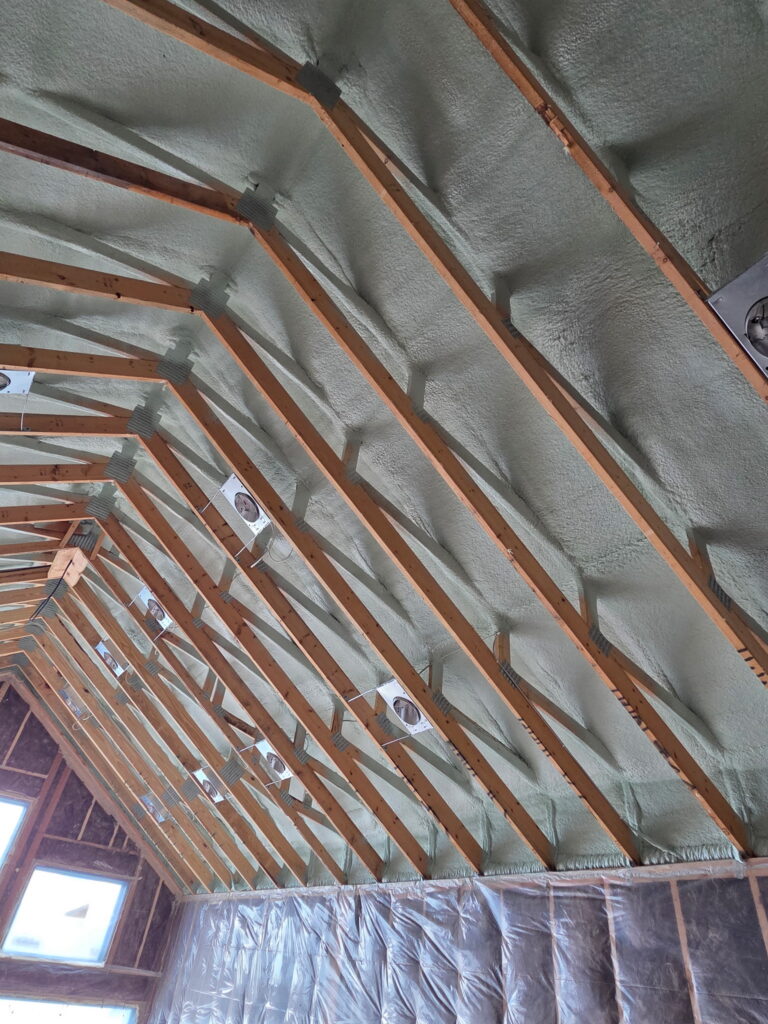
Spray foam insulation is applied as a liquid that expands into a foam, filling cracks, gaps, and cavities throughout a home or building. Once cured, it forms a durable layer that provides both insulation and air sealing in a single application.
Unlike traditional insulation materials, spray foam adheres directly to surfaces and creates an airtight barrier, helping reduce drafts and improve temperature control.
A lighter, more flexible material that expands significantly to fill cavities. It is often used in interior walls and attics where sound absorption and cost-efficiency are priorities.
A denser, more rigid insulation that provides a higher R-value per inch and acts as a moisture barrier. It is ideal for areas where maximum insulation performance and moisture resistance are needed.
Spray foam insulation can be installed in many areas, including:
Because it expands to fill gaps, spray foam is especially effective in areas where air leaks are common.
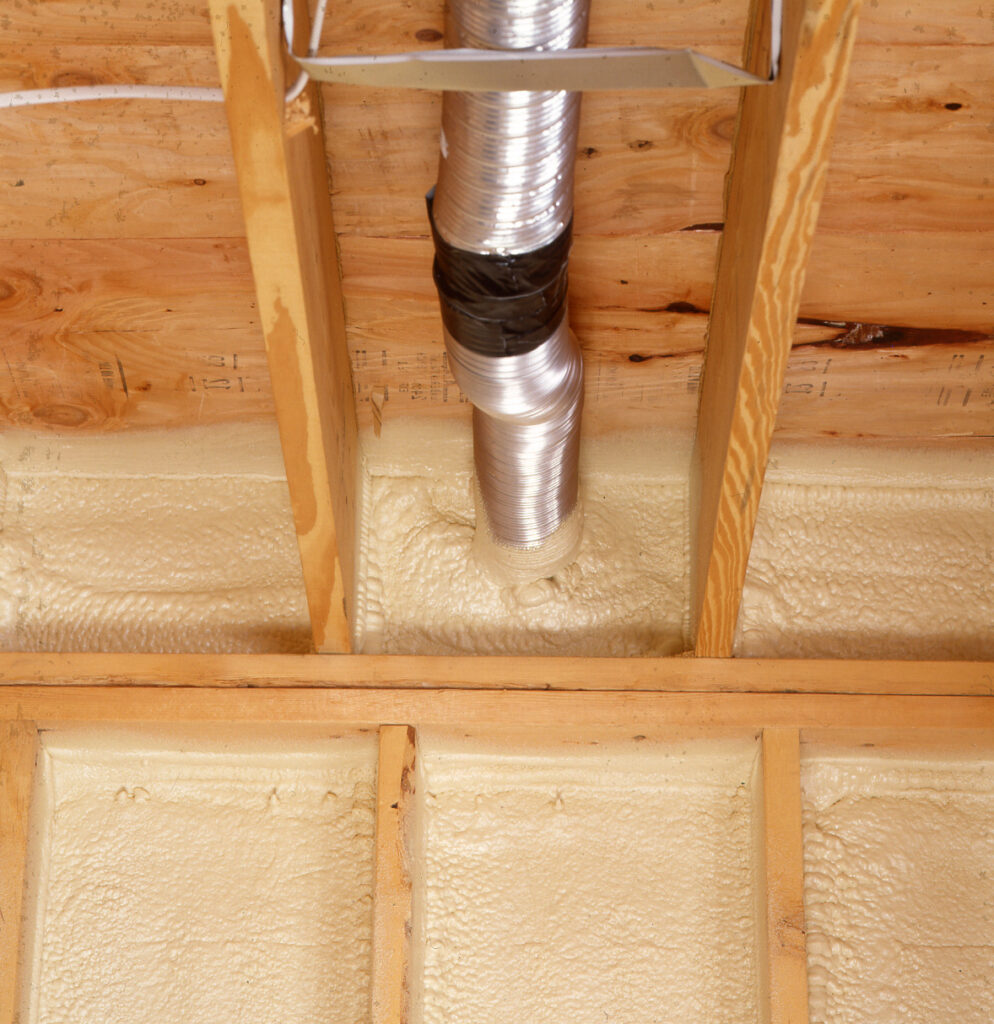
Traditional insulation materials like fiberglass and cellulose primarily slow heat transfer but may still allow air movement. Spray foam insulation, on the other hand, works as both an insulator and an air barrier, addressing two key sources of energy loss at once.
This combination often results in improved efficiency and more consistent indoor comfort.
Improve energy efficiency, reduce air leaks, and create a more comfortable space with spray foam insulation.
Contact Installed Building Solutions today to schedule your free crawl space inspection and estimate.
We understand your job site. We work efficiently alongside your other trades. And we make sure every installation is inspection-ready before you move on.
Spray foam insulation is a liquid material that is applied to walls, attics, and other surfaces, where it expands into foam and hardens. This process creates a continuous barrier that helps reduce heat transfer and seal air leaks.
Open-cell spray foam is lighter, more flexible, and typically more affordable, while closed-cell spray foam is denser, provides a higher R-value per inch, and offers better moisture resistance. The best choice depends on your space, budget, and performance needs.
Yes, spray foam insulation is highly effective because it both insulates and seals air leaks at the same time. This helps maintain consistent indoor temperatures and can significantly reduce heating and cooling costs.
Spray foam insulation is designed to be long-lasting and does not sag or settle over time. When properly installed, it can maintain its performance for many years, helping provide long-term energy savings and comfort.